Narrative short
Confessions
Director of photography
Yucheng Hou
A question of forgiveness.
Following the death of his sister Lucy, Paul returns to a church to confront John, the priest who heard her confession. Across the partition of a confessional, their conversation begins to unravel the boundaries between faith, silence and responsibility.
As memory interrupts the present, a search for answers becomes an encounter with guilt — and with the limits of forgiveness.
Selected frames
Click to view full frame ↗Cinematographer’s statement
Light / Space / MemoryGiving silence
a physical presence.
The cinematography of Confessions began with Paul’s emotional state. I wanted light, space and distance to carry the weight of his guilt and hesitation, allowing the audience to feel the pressure before it was spoken.
In development, the director and I moved away from a more agitated opening. Instead, Paul pauses to look at the figure of Christ before the film enters his memories. This restraint gives the emotion time to accumulate, preserving the progression of the confrontation that follows.
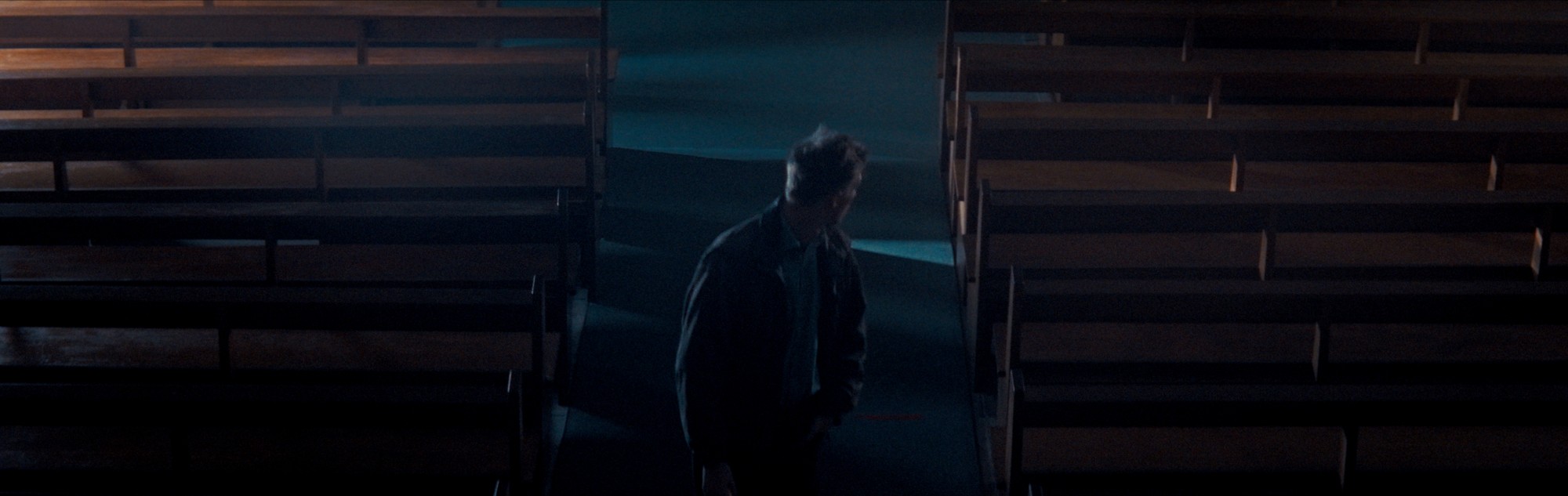
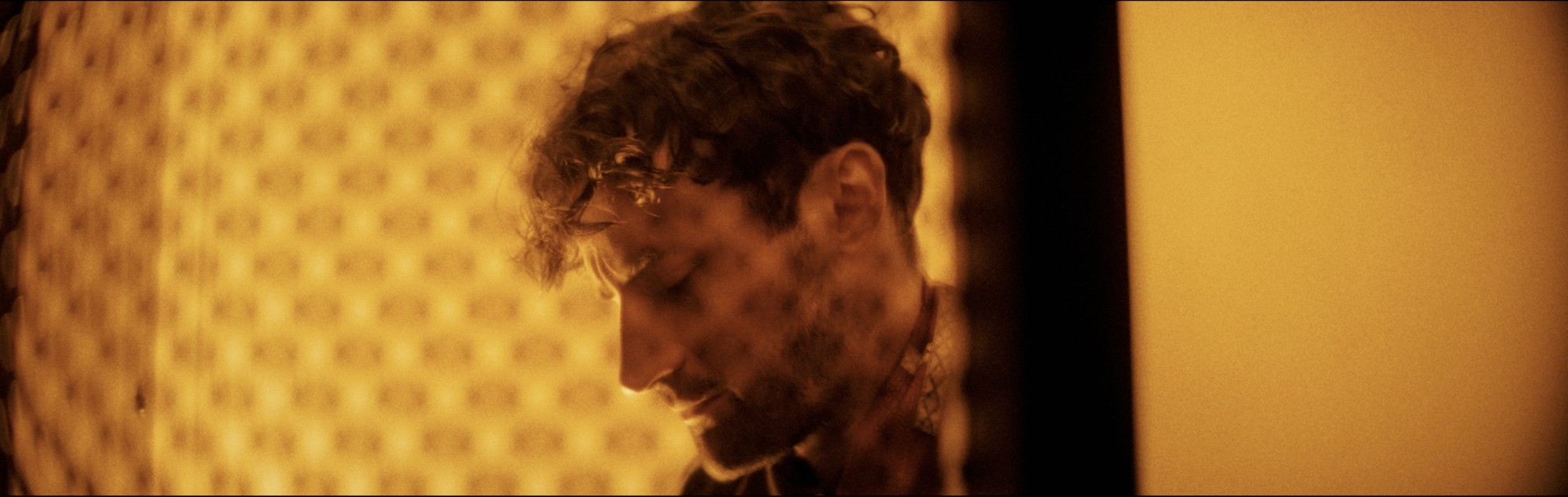
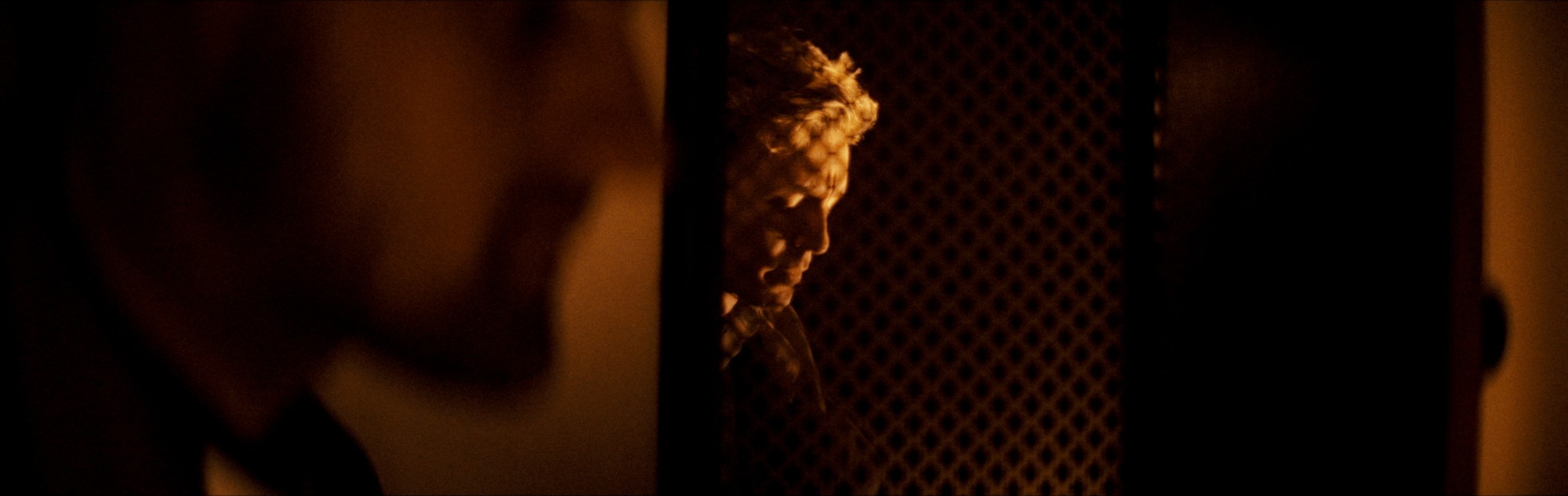
For the present-day church and confessional scenes, I chose 2× anamorphic lenses. The wide frame holds the partitions, grilles and negative space within a confined location, making the architecture part of the relationship. Faces are only partially visible; two people can be physically close and still remain separated.
The lighting follows the logic of believable sources within each space, retaining the facial detail needed for performance while allowing much of the environment to fall into shadow. The cool church and warm confessional offer different registers of light, but the warmth remains enclosed by darkness and obstruction.
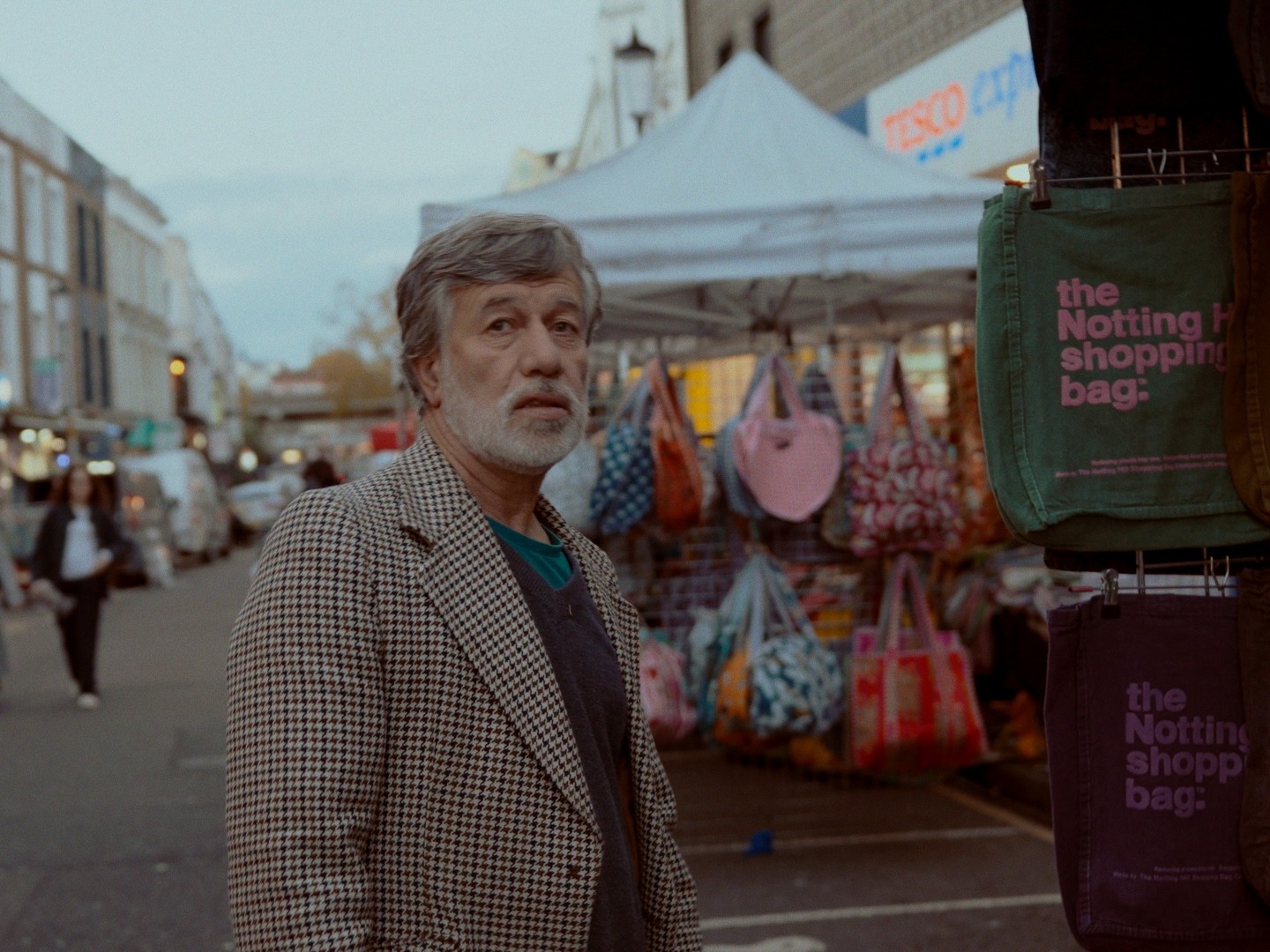
Memory sequences use spherical lenses and a more natural sense of space. Available-light textures and intimate details create a subtle distinction from the present. The exterior opens the frame, while the unease remains with the characters.
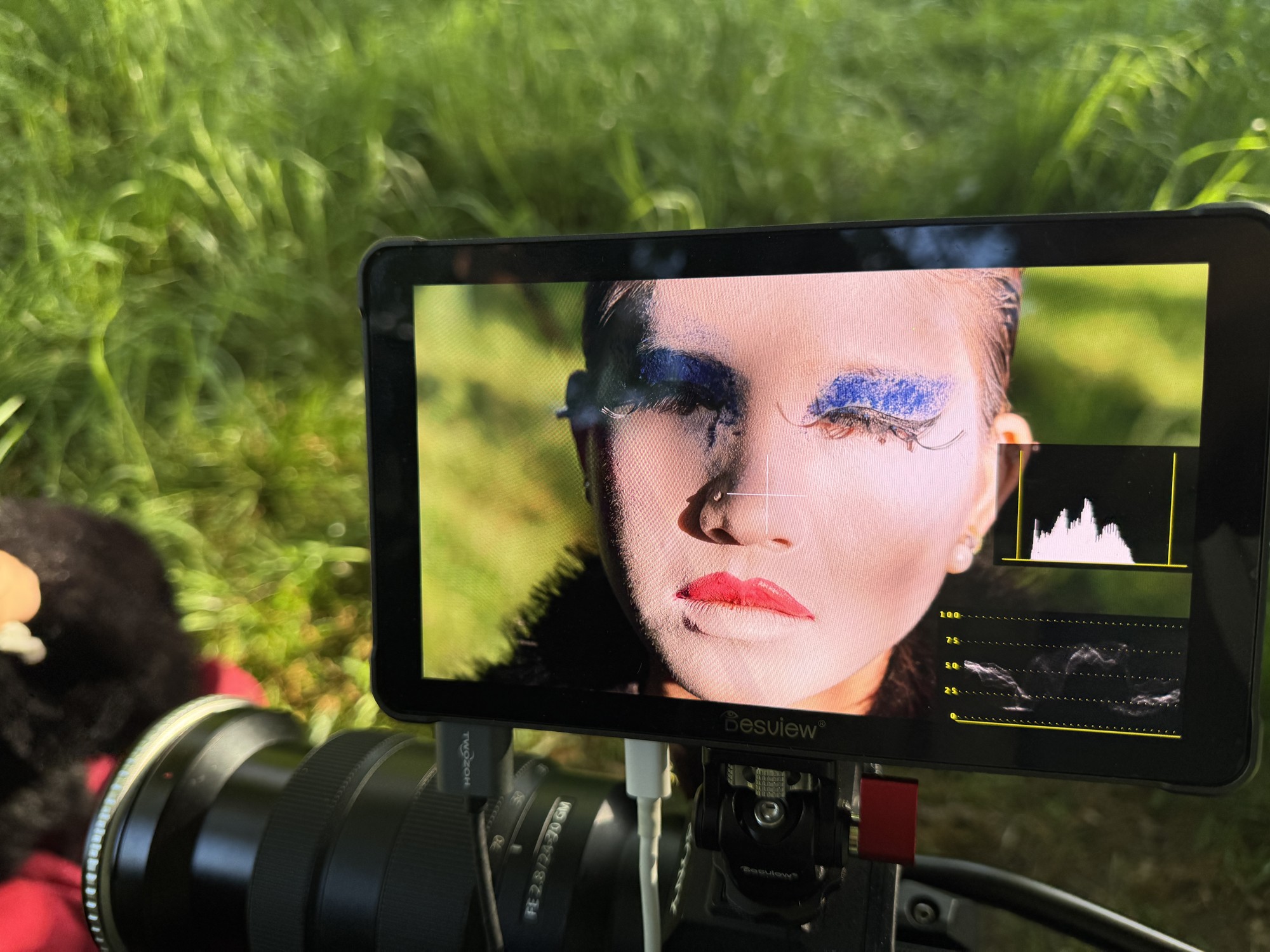
Through test shoots, blackout setups, monitoring LUTs and on-set adjustments, I worked to protect that visual intention within the production’s limits. At its core, this was an exploration of what a gaze, a pause or an obscured face can reveal about what someone cannot yet say.